A patient speaks. Desha understands, remembers and acts, in real time.
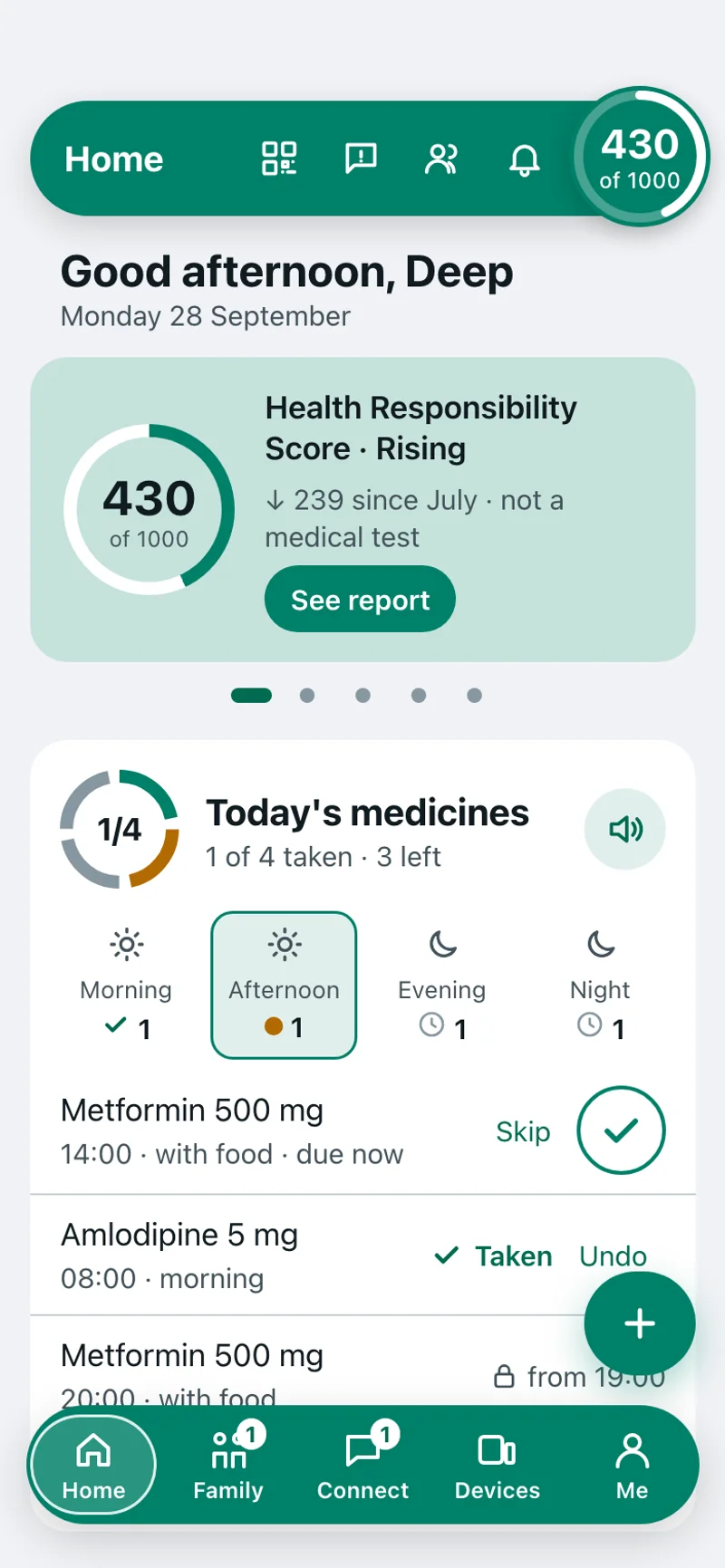
Follow one conversation as it moves through Desha. It starts with a phone call or an app message, becomes a natural reply in the patient’s own language, and ends in real-world care actions and a note to the doctor. Watch it play, or tap any step to explore.
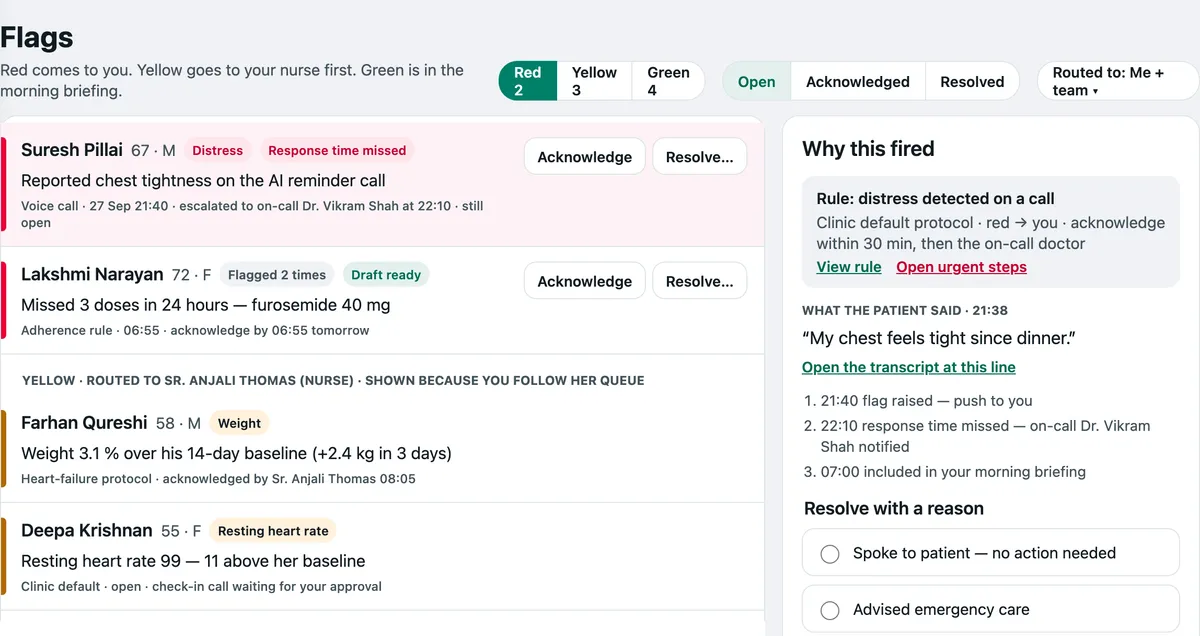
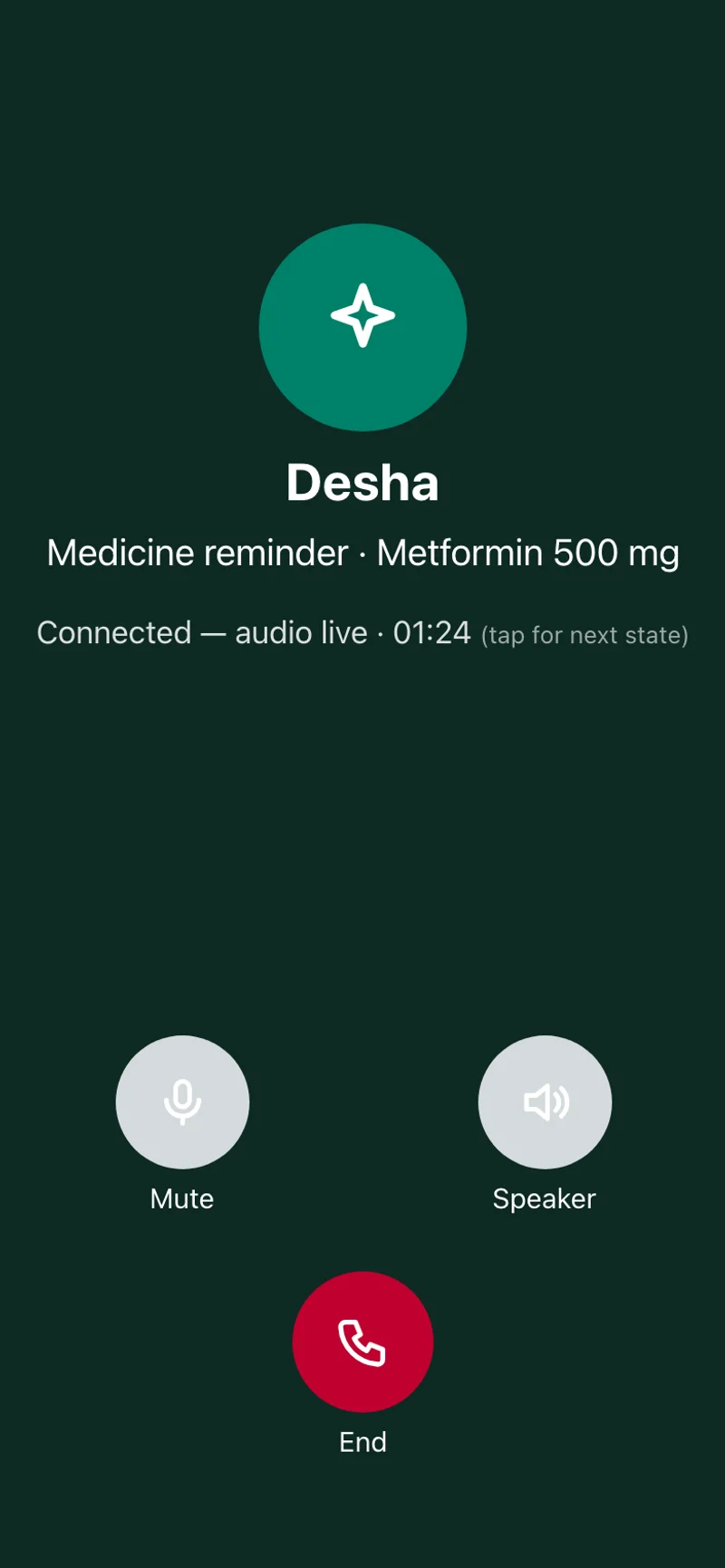
Sample data. A call on the phone, and the flag it raises for the clinician.
The call, step by step
Follow one reminder call, from a scheduled dose to a spoken reply.
Trigger
A scheduled dose becomes due and the outbound caller picks it up.
Speech-to-text by Deepgram, conversation logic in LangGraph, outbound calls through Twilio, Telnyx or Plivo, in 21 languages.
HeartBeat, the agents behind the call
8 small services, each with one job.
voice-pipeline
Real-time speech to text and back, with barge-in.
conversation-brain
LangGraph reasoning over the patient's context.
rag-agent
Fetches fresh patient context on every turn.
outbound-caller
Schedules and places reminder calls.
notification-agent
Sends app push and WhatsApp messages.
telephony-gateway
Routes Twilio, Telnyx and Plivo calls.
app-call-bridge-agent
Connects family members to a call.
hrs-profile-agent
Calculates the weekly Health Responsibility Score.
The Health Responsibility Score
One number from 100 to 1000 that shows how consistently a person keeps up with their care. MedNote and DocNote show the same number. Not a medical test.
It does not diagnose, measure clinical risk or replace clinical judgement.
5 pillars
Taking medicines on time 35%
C1 Medication management
Doses taken, on time and in full.
Answering reminder calls 30%
C2 Proactive engagement
Picking up the daily check-in.
Long-term medicines 20%
C3 Condition management
Keeping up with ongoing prescriptions.
Talking about your health 10%
C4 Health literacy
Real conversations on calls, not just yes or no.
Days in a row 5%
C5 Long-term habits
A streak of good days.
Wearable activity can add or take away up to 10 points; other adjustments (missed critical doses, streaks) are capped at 70 points in total.
The score rises with steady habits, week after week. Taking medicines on time carries the most weight.
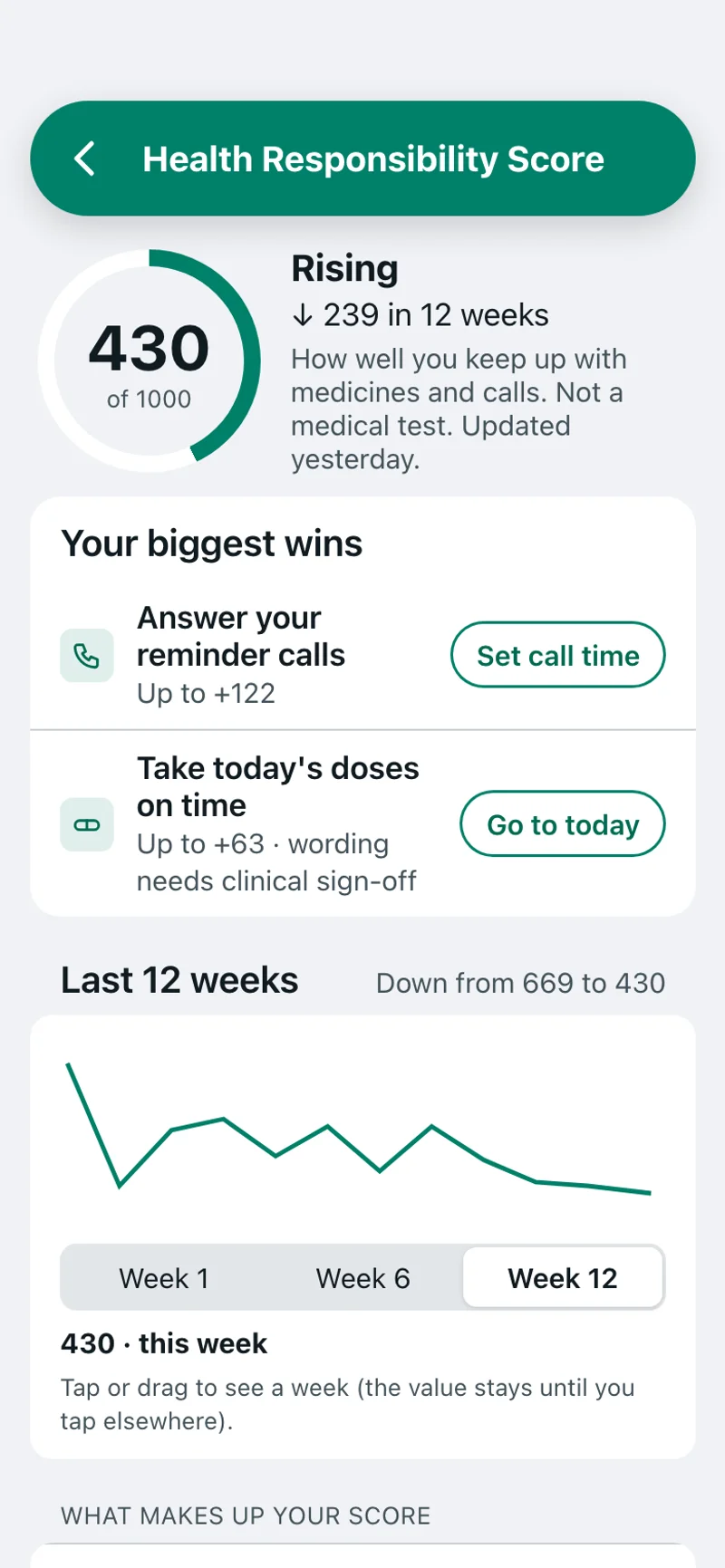
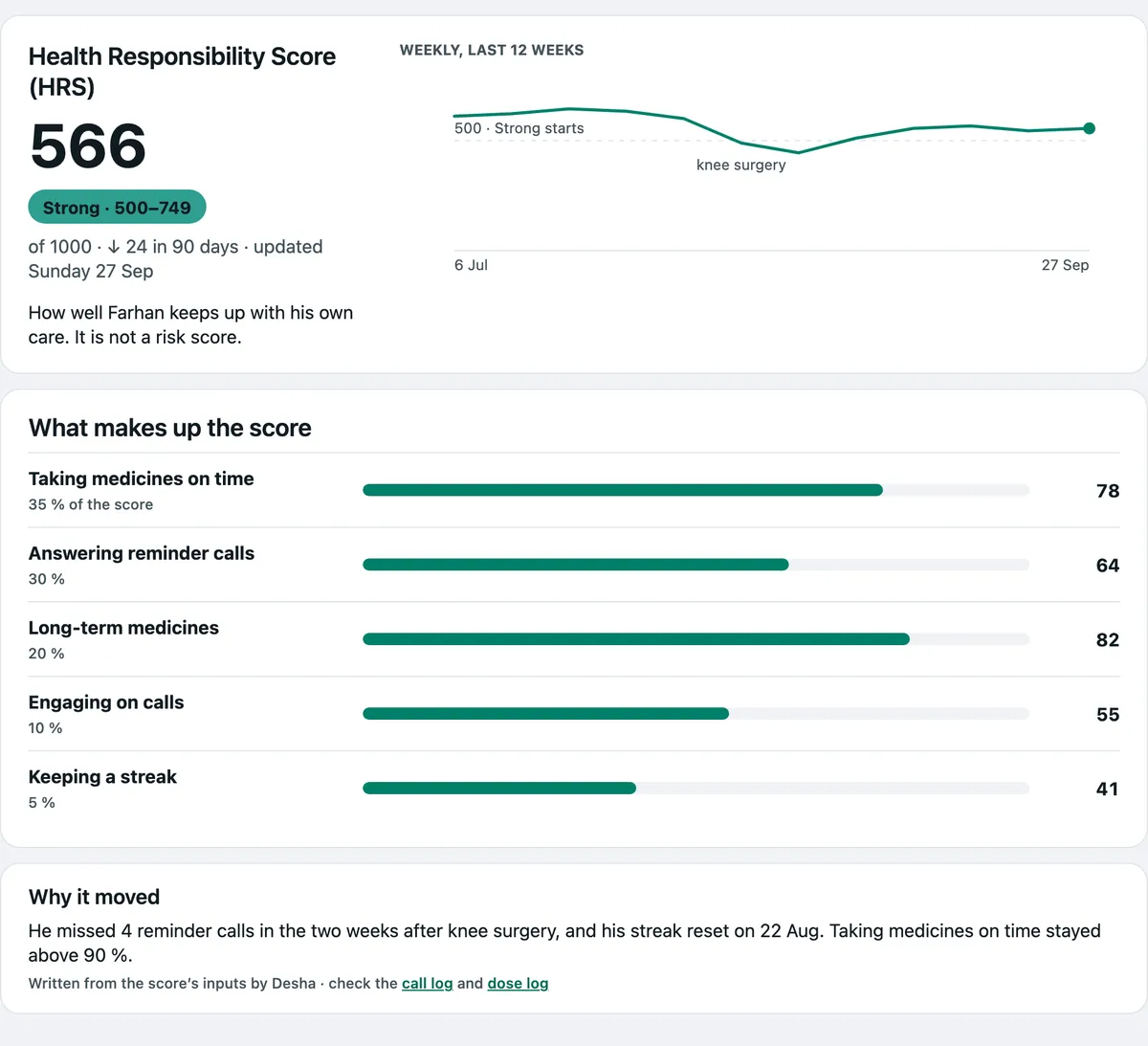
The same score, patient side and clinician side.
Score bands
Getting started
100 to 249
Rising
250 to 499
Strong
500 to 749
Champion
750 to 1000
Pharmacies and insurers rewarding a high score is on the roadmap. It is not live today.
The measured timeline
Before a consultation, the clinician opens a brief built from the patient's logged doses, score trend and reported symptoms.
Metformin adherence to ≥ 90%; review the week-3 symptom flare.
Adherence held at 93%; HRS up +72. The conversation starts from results.
One shared record holds adherence, HRS and symptoms over time. So every consultation starts from measured outcomes, not memory.
Illustration with sample data, not a result.
Live today in MedNote and DocNote.